
info@raynerdiesel.co.uk
I know it’s winter but we seem to have had consistent rain since that brief cold snap at the start of December. And if long range weather forecasts are anything to go by, Atlantic depressions will be a feature for a while yet. Crazily, it was only a few weeks ago that water companies wrote to us all to say the official drought had been called off. But heavy rain for prolonged periods quickly tops up the water table. And that means drains are slower to work and flooding on the roads is more likely. Needless to say, heavy rain and flooding can lead to some tricky driving conditions. So with that in mind, here’s a few tips for driving in bad weather and particularly rain and floods.
It seems like a simple thing to suggest but always question whether your journey is really necessary. Could you put it off until conditions are better? If you absolutely must drive in heavy rain, when flooding may be encountered, there are things you can do to prepare. A little bit of planning could prevent an accident or even a breakdown. For example, is their a notorious spot that always floods? If so, is there an alternate route you could take? Bear in mind journey times normally increase in bad weather. So if you’re taking a longer route, factor this into your set off time.
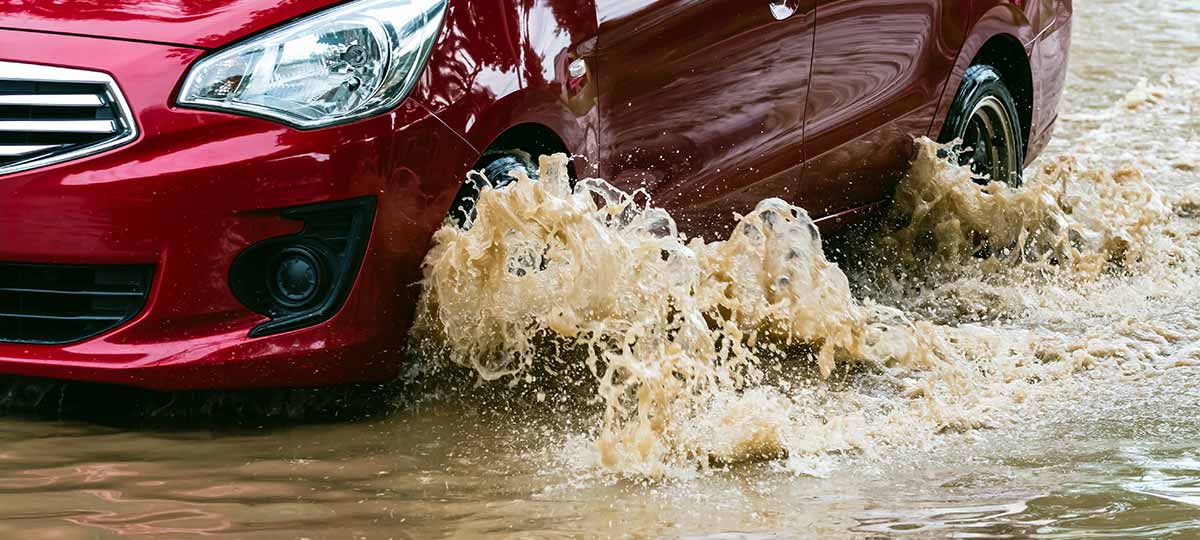
Statistics from the AA and RAC show that breakdowns always increase during periods of wet weather. The reason for this is often that the damp can cause engine problems or interfere with electrical systems. Both of these can cause your vehicle to breakdown. There’s also the issue of driving through flood water. No matter how good a driver you think you are, driving through flood water can flood your engine. Even if you know how to do it correctly, how do you judge how deep the water is accurately? So following these tips for driving in bad weather could save you time and money on expensive repairs.
The key elements of your vehicle to check before driving in bad weather are the tyres, windscreen wipers and fuel.
According to the Highway Code, stopping distances are at least double normal rates in wet weather. The simple fact is that your tyres have significantly less grip on the road when water is involved. And these figures relate to road legal tyres. If your tyres are under the legal tyre tread depth your stopping distance could be significantly longer than just double. When you add inappropriate speed into the mix then accidents are more likely. In fact this is the main cause of accidents in wet weather. So always check your tyres are road legal before any journey but especially when driving in bad weather. If you’re unsure how to do this, you can drop your vehicle into us. We can check your tread depth and stock a range of replacement tyres should you need to replace them.
When we’ve had the sort of hot summer we’ve just had, even if you haven’t used them, your wiper blades will have been affected. The rubber used in the wipers become brittle when exposed to prolonged extreme heat. So even though you may not have worn them through use, they could become distorted and therefore ineffective. So it’s always a good idea to check them as we move into the colder months. When the weather becomes wetter you want to be able to rely on your wipers to clear your windscreen.
Wiper blades are fairly simple to replace so if they’re not clearing the screen properly it’s best to get a new set. Ensuring screen fluid is topped up is also important. At this time of year, particularly when the gritters have been out, dirt and grime on the roads can obscure your view. And your wipers alone won’t always clear smears and grime build ups.
Another top tip for driving in bad weather is to keep your air conditioning on. If it’s cooler outside and you have the heating on the screen can easily mist up. So you’ve got visual impairment both inside and out, not good. Keeping air directed at the windscreen can help to prevent this.
It’s important to be mindful of your fuel levels before setting off in poor weather. Slower driving conditions and frequent traffic build ups mean you’ll be using more fuel than usual. Not only that, if you’ve got the heater, air con and lights all going, that increases fuel consumption even more. It may not seem like an issue but if you set off on low fuel reserves you could quickly become anxious when the fuel light comes on and you’re stuck in traffic. A little bit of preparation beforehand can save a whole lot of stress.
These are just a few tips for driving in bad weather that may make any journey you need to take a little less of a drama. Of course, keeping your vehicle in good working order at all times will help to alleviate the worry of a breakdown. So if you’ve not had the car serviced for a while, now may be a good time to book it in! Our friendly reception staff are ready to help you.

